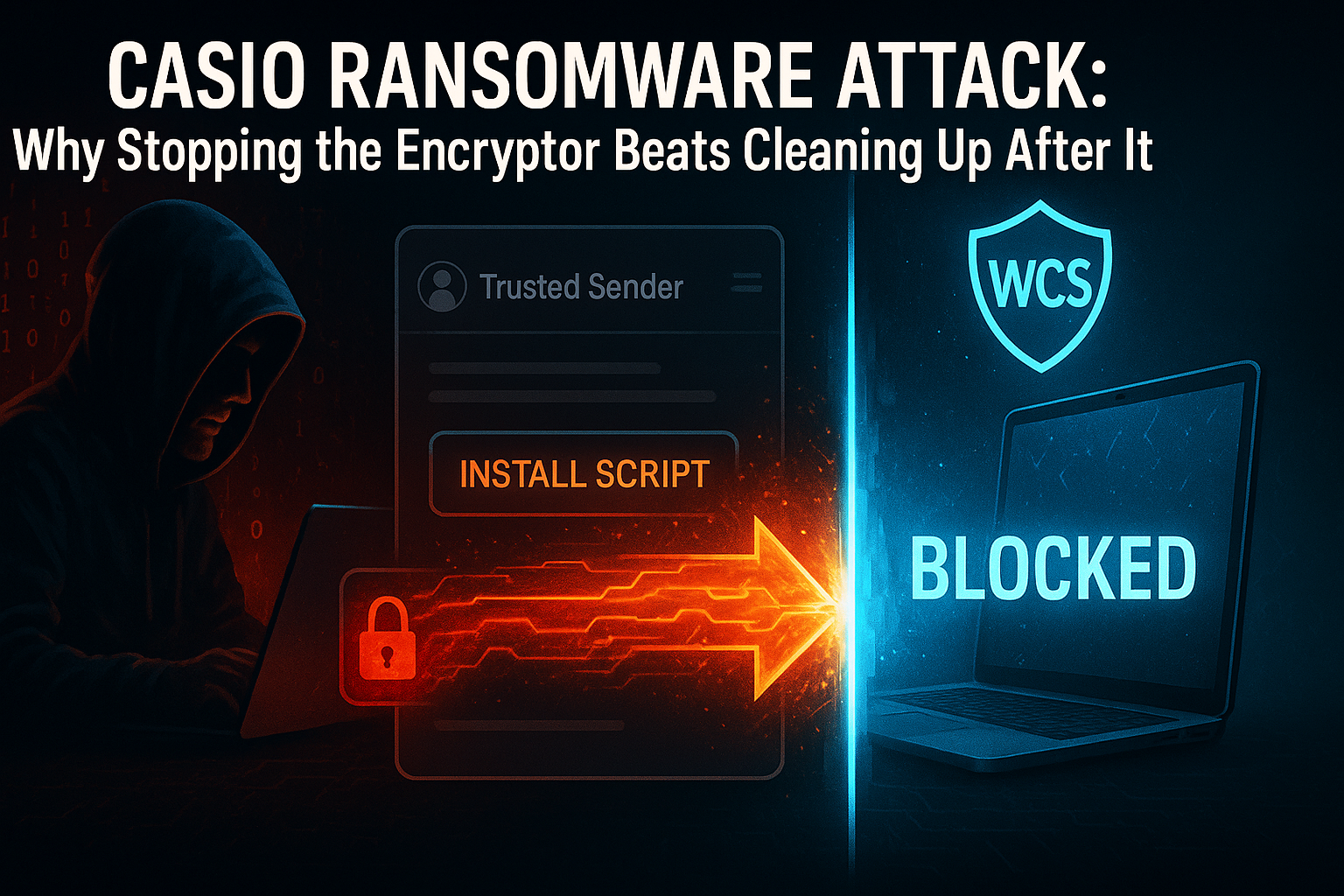
Casio Ransomware Attack: Why Stopping the Encryptor Beats Cleaning Up After It
A major manufacturer's October 2024 ransomware incident shows that the decisive moment is preventing unauthorized software from running — not recovering after it does
Date: October 11, 2024 Primary Source: Casio (Casio Notice) · BleepingComputer (BleepingComputer)
Executive Summary
- What: Casio confirmed a ransomware attack that disrupted services and exposed personal data; the Underground ransomware group claimed responsibility and the personal data of roughly 8,500 people was exposed.
- Who is affected: Primarily Casio employees and business partners, with a small set of customer data — a pattern relevant to any organization holding workforce and partner records.
- Severity: High — operational outage plus data-theft double extortion, with a slow recovery ("no prospect of recovery yet" reported mid-October).
- Action required: Treat ransomware as an execution-control problem first: prevent unauthorized encryptors from running, and pair that with phishing defenses, MFA, and tested backups.
Overview
In October 2024, Casio Computer Co., Ltd. disclosed that a ransomware attack had caused a partial service outage and an information leak. In its public notice dated October 11, 2024, Casio described unauthorized access to its network and the resulting disruption. (Casio Notice) Reporting indicates the intrusion occurred around October 5 and was claimed on October 10 by the Underground ransomware group, which threatened to release stolen documents unless paid. (BleepingComputer)
Casio later confirmed that the personal data of approximately 8,500 people was exposed — mostly employees and business partners, with a smaller set of customer information. (BleepingComputer) By mid-October, the company reported there was "no prospect of recovery yet," underscoring how disruptive even a single ransomware event can be for a large, well-resourced organization. (TechCrunch)
For business leaders, the lesson is not about Casio specifically. It is that every control which activates after an encryptor starts running is racing the clock. The most reliable place to stop ransomware is before the unauthorized executable is allowed to start — which is what White Cloud Security (WCS) Trust Lockdown is designed to do.
Threat Summary
| Field | Detail |
|---|---|
| Victim | Casio Computer Co., Ltd. |
| Public disclosure | October 11, 2024 |
| Threat actor | Underground ransomware group |
| Incident type | Ransomware + data theft (double extortion) |
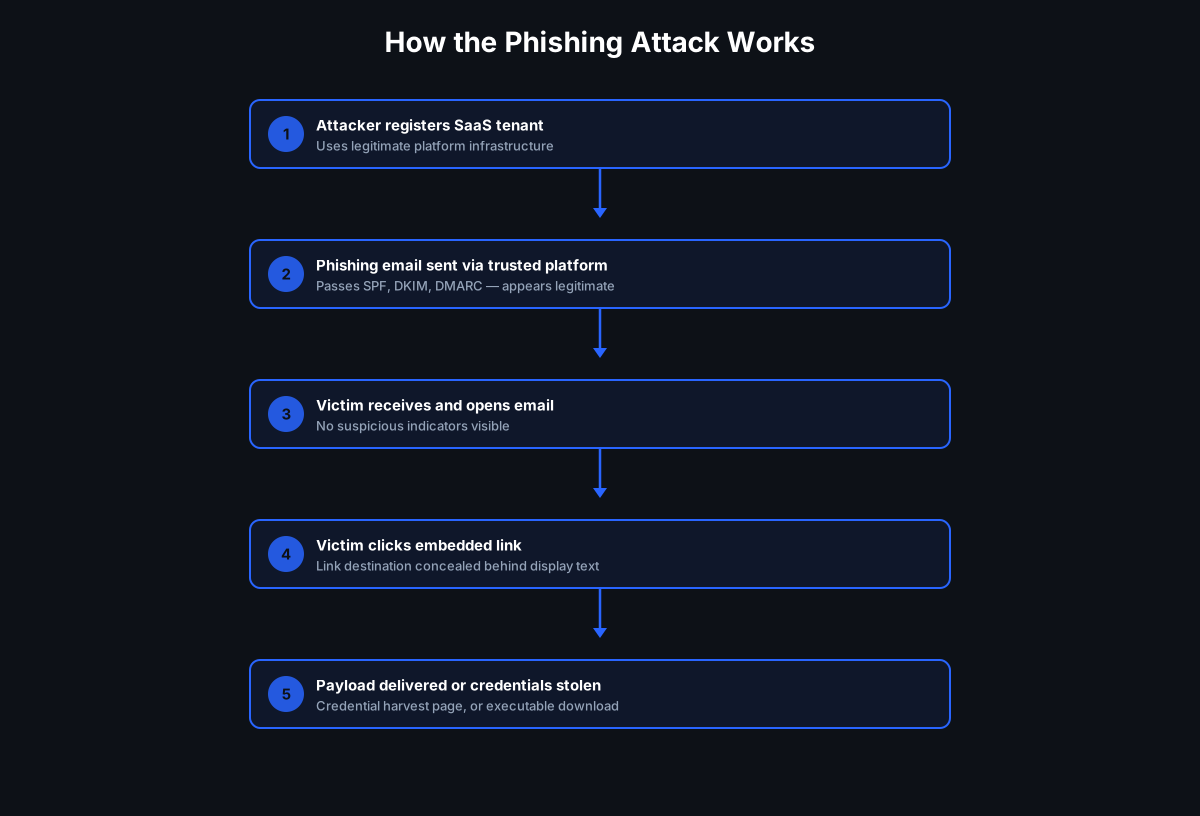
| Initial access | Reported phishing leading to network compromise |
| Impact | Service outage; ~8,500 people's personal data exposed; slow recovery |
| Exploited in the wild | Yes |
| Patch available | N/A — this is an execution-control problem, not a single CVE |
Technical Analysis
How the Attack Works
Ransomware intrusions of this kind generally follow a recognizable pattern, and Casio's disclosure and subsequent reporting are consistent with it: (Casio Notice) (BleepingComputer)
- Initial access. A foothold is established — in this case reportedly via phishing — giving the attacker a way onto the network.
- Escalation and movement. The attacker expands access and positions tooling across reachable systems.
- Data theft. Sensitive files are exfiltrated to enable extortion even if backups exist.
- Encryption. An encryptor is executed to lock files and force payment.
- Extortion. The actor pressures the victim publicly and privately, threatening to leak stolen data.
Payload and Impact
The business impact is the familiar double-extortion combination: operational downtime from encryption plus the reputational and regulatory exposure of leaked employee, partner, and customer data. The exposure of ~8,500 individuals' records — and the extended recovery — illustrate how costly the after-the-fact phase is once unauthorized code has run. (TechCrunch)
Why Traditional Defenses Struggle
- New or customized encryptors may not match an existing signature, so signature- and reputation-based tools can miss them.
- Phishing gets through. Awareness training reduces but never eliminates successful lures, so prevention cannot depend on users always making the right call.
- Detection often fires mid-encryption. By the time behavioral analytics flag mass file changes, the most active files may already be encrypted.
- Legitimate tools blend in. Attackers frequently abuse built-in admin utilities and remote-access software, which look normal in logs.
How White Cloud Security Trust Lockdown Stops This
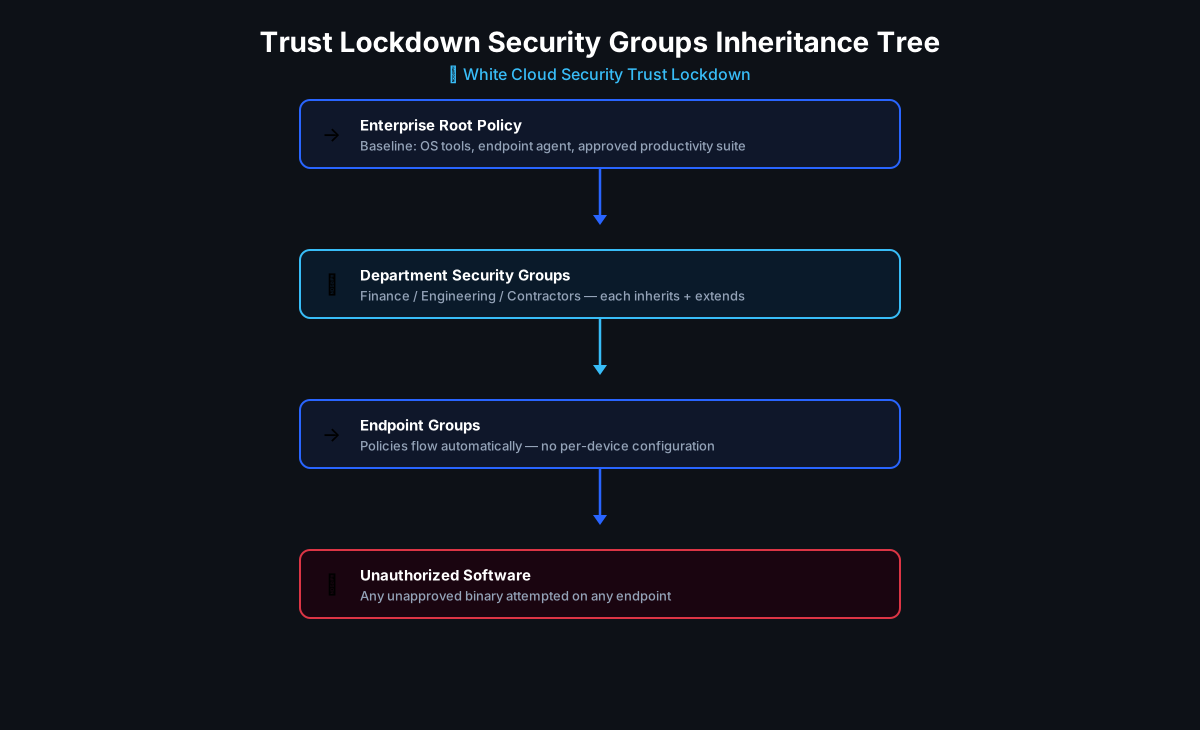
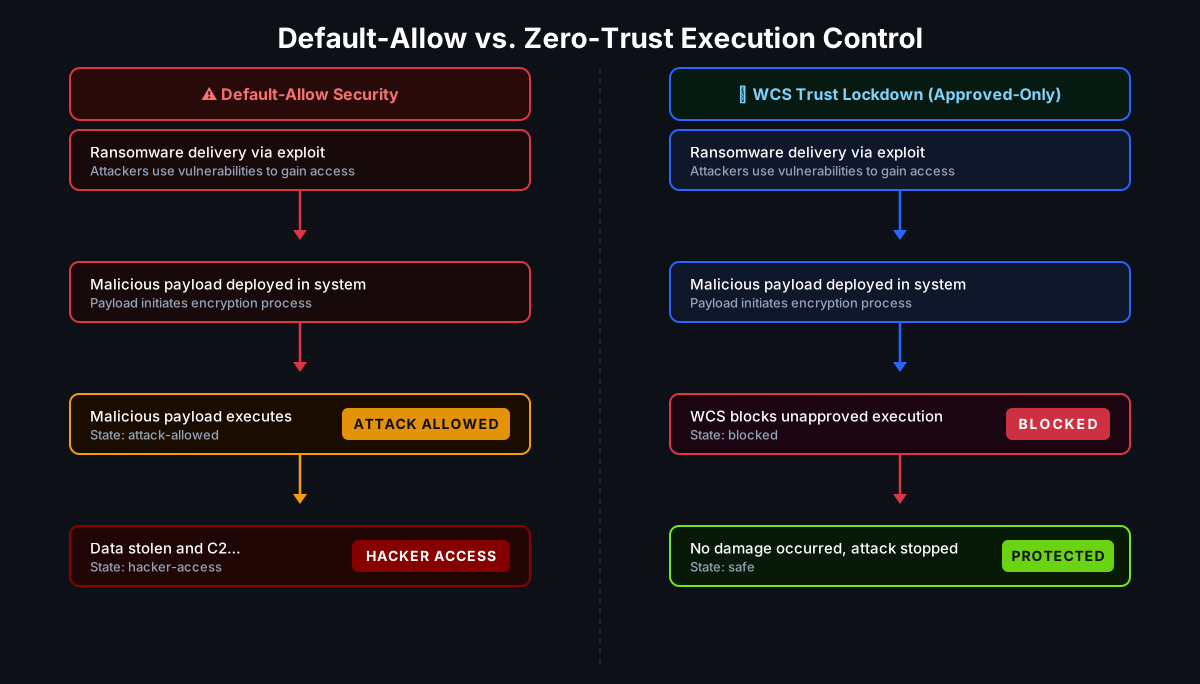
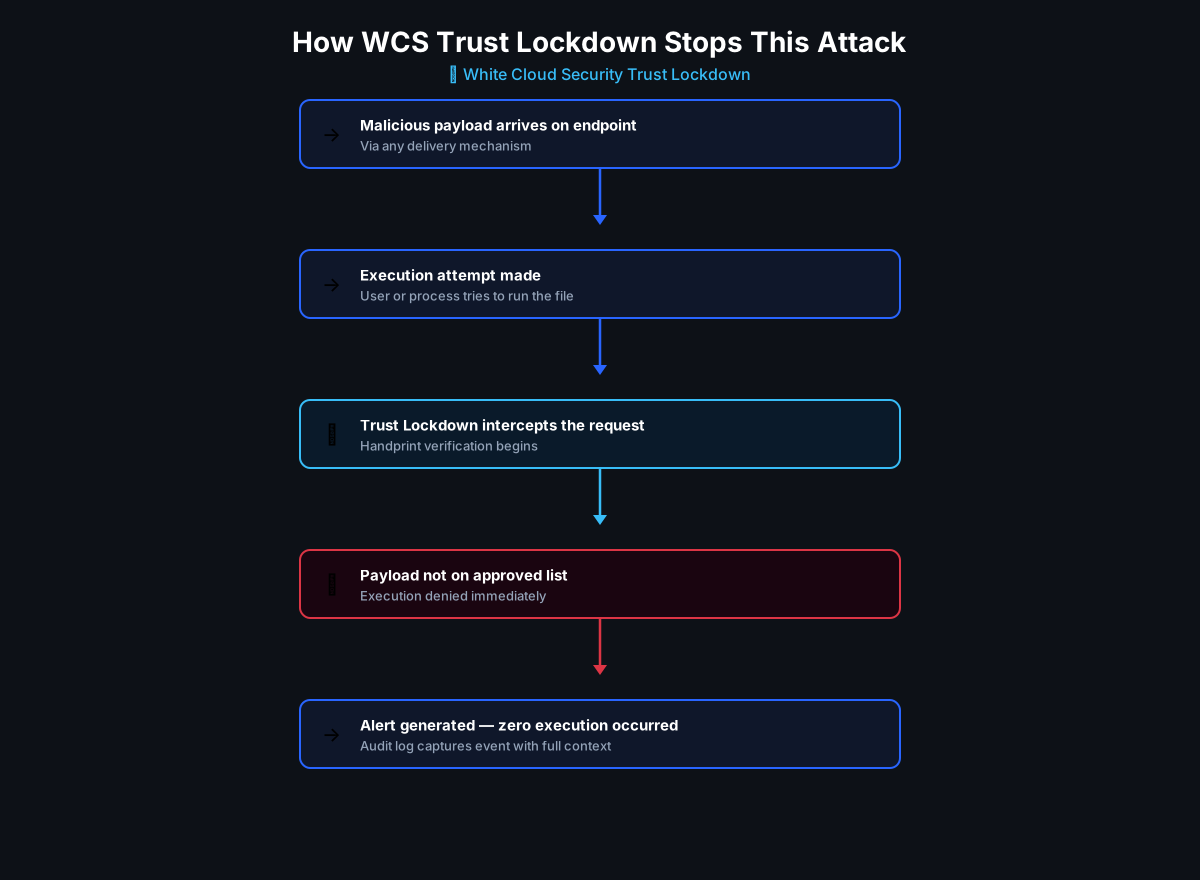
WCS Trust Lockdown is a default-deny, Zero-Trust App Firewall: nothing executes unless it has been explicitly Approved by application, publisher/certificate, handprint, and approved parent-child relationship. Everything else is Denied before it runs.
| Attack step | How WCS would help |
|---|---|
| Phishing foothold | WCS does not stop the lure, but an unknown payload dropped afterward would be denied unless approved |
| Tooling staged across systems | Unapproved remote-access tools and utilities would be blocked from executing |
| Encryptor launched | An unknown ransomware binary would be prevented from running — no signature or family name required |
| Renamed / recompiled encryptor | Identity is verified by handprint (SHA-1, SHA-256, SHA-512, MD5, CRC32, file length), so a changed hash would still be denied |
WCS does not need to know an encryptor is operated by "Underground" to stop it. If the executable, certificate, handprint, or execution path is not approved, it is denied — and administrators would gain visibility into what was blocked for review.
To be precise about scope: WCS would help block the unauthorized encryptor from running and would reduce the attack surface even after a phishing foothold. It does not replace phishing-awareness training, MFA, EDR, or backups; it is a preventive execution-control layer that complements them.
At White Cloud Security, we continue to track and report new hacking methods and tools — not just because of their immediate threat, but because patterns of reuse often expose the playbooks of these cybercriminal groups.
Recommended Mitigations
- Deploy default-deny application control so unknown executables cannot run, especially from user-writable locations.
- Strengthen phishing defenses and enforce MFA on remote access and email.
- Maintain tested, offline/immutable backups — prevention first, recovery as a backstop.
- Segment networks and apply least privilege to limit lateral movement.
- Review blocked unknown applications to inform approve/deny governance.
Key Takeaways
- If ransomware cannot run, it cannot encrypt. The decisive event is stopping the unauthorized encryptor, not detecting encryption in progress.
- Phishing will sometimes succeed — execution control is the layer that holds when a user clicks.
- Handprint identity denies renamed or recompiled encryptors that defeat signatures.
- Prevention complements, not replaces MFA, EDR, backups, and awareness training.
References
- Casio — Notice of Partial Service Outage and Information Leak Caused by Ransomware Attack (Casio Notice)
- BleepingComputer — Casio says data of 8,500 people exposed in October ransomware attack (BleepingComputer)
- TechCrunch — Casio says 'no prospect of recovery yet' after ransomware attack (TechCrunch)
Further Reading
- Embargo Ransomware Brings Its Own EDR Killer — Default-Deny Blocks It First
- When VPN Access Becomes Ransomware in an Hour: Stopping Fog and Akira at Execution